The photographs featured here were made in Dahshour, an area located on the west bank of the Nile River about 40 kilometers south of Cairo. Egypt is known for being one of the largest exporters of dates worldwide.
To the inexperienced eye, all palm trees look the same, however each wood pattern, frond leaf shape, date colour and even texture of the palm fibers are incredibly diverse. Egypt is home to over twenty varieties of dates, each region and community having developed their own method of harvesting and production of foods which contain dates. Every year in September, Egyptian villages bustle with harvest and processing activities, fully immersing themselves in the peak of date season. The fruiting palms have beautiful bunches of dates, colours ranging from bright yellow, red, purple to dark brown. Local farmers who grew up in date palm groves, like those in Dahshour, can differentiate each date palm by the texture of the palm tree’s trunk.
I spent a day photographing Ibtisam and Ashraf harvesting in Dahshour. The ‘manshar’ is an area that is set aside as the seasonal harvesting workspace located on the rooftop of one of their buildings in the grove. For almost two months a year the family farm is converted into a small scale processing plant where colourful dates turn the rooftop into a carpet of date patchwork. Dates are carefully separated by colour depending on their ripening stage, then dried and pressed into baskets made from palm fronds. Those are later sold as ‘Agwa’- a thick date paste that is easily stored and therefore sold all year round. Small scale farmers such as Ashraf and Ibtisam rely almost entirely on products derived from dates as their primary source of income.
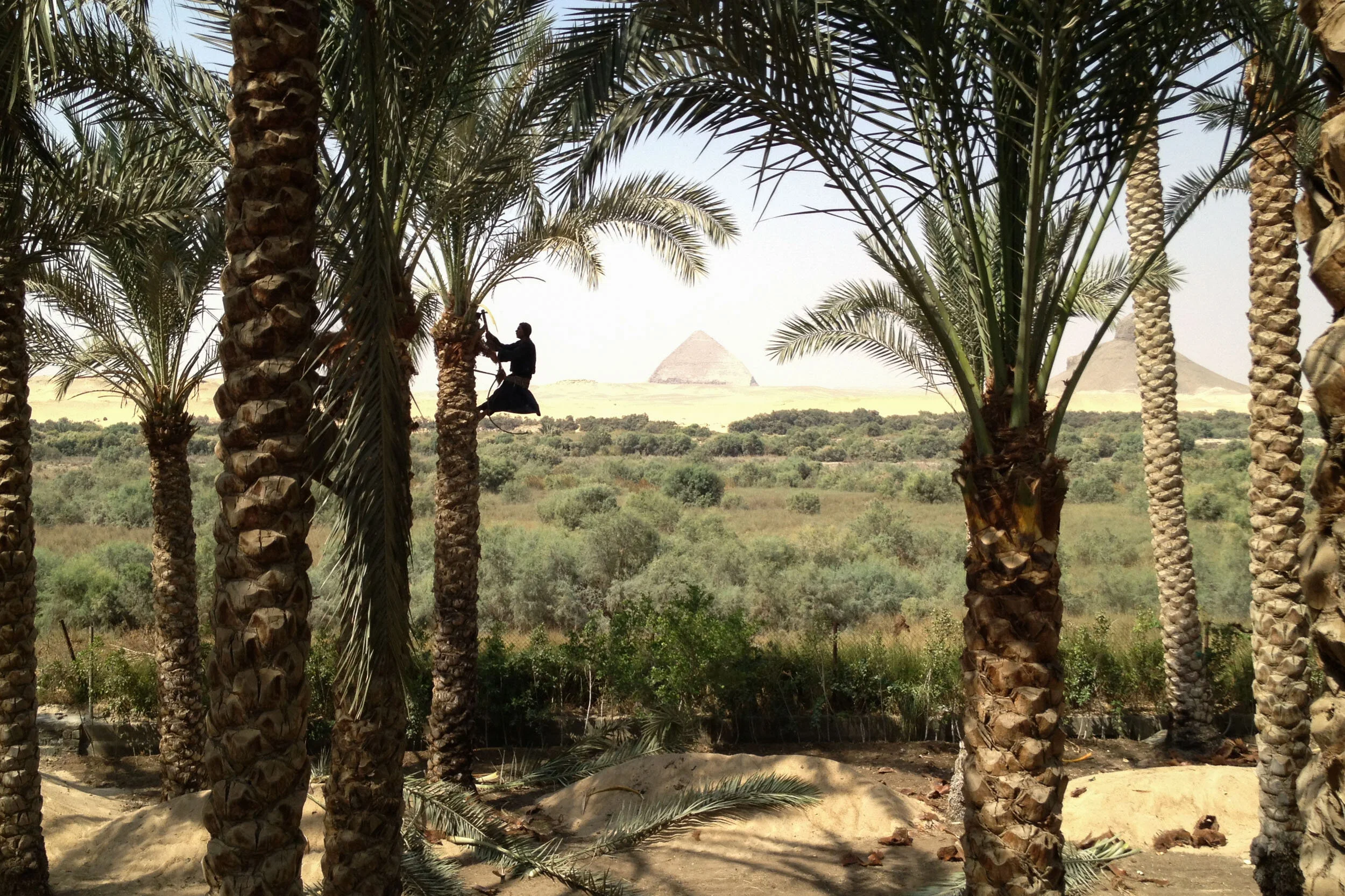
A silhouette of a man trimming and cleaning a palm tree in Dahshour. In the far distance, the Bent Pyramid, an ancient Egyptian pyramid located at the royal necropolis of Dahshour, approximately 40 kilometres south of Cairo, Egypt's capital. To the right, the Red Pyramid, the world's first true smooth-sided pyramid.
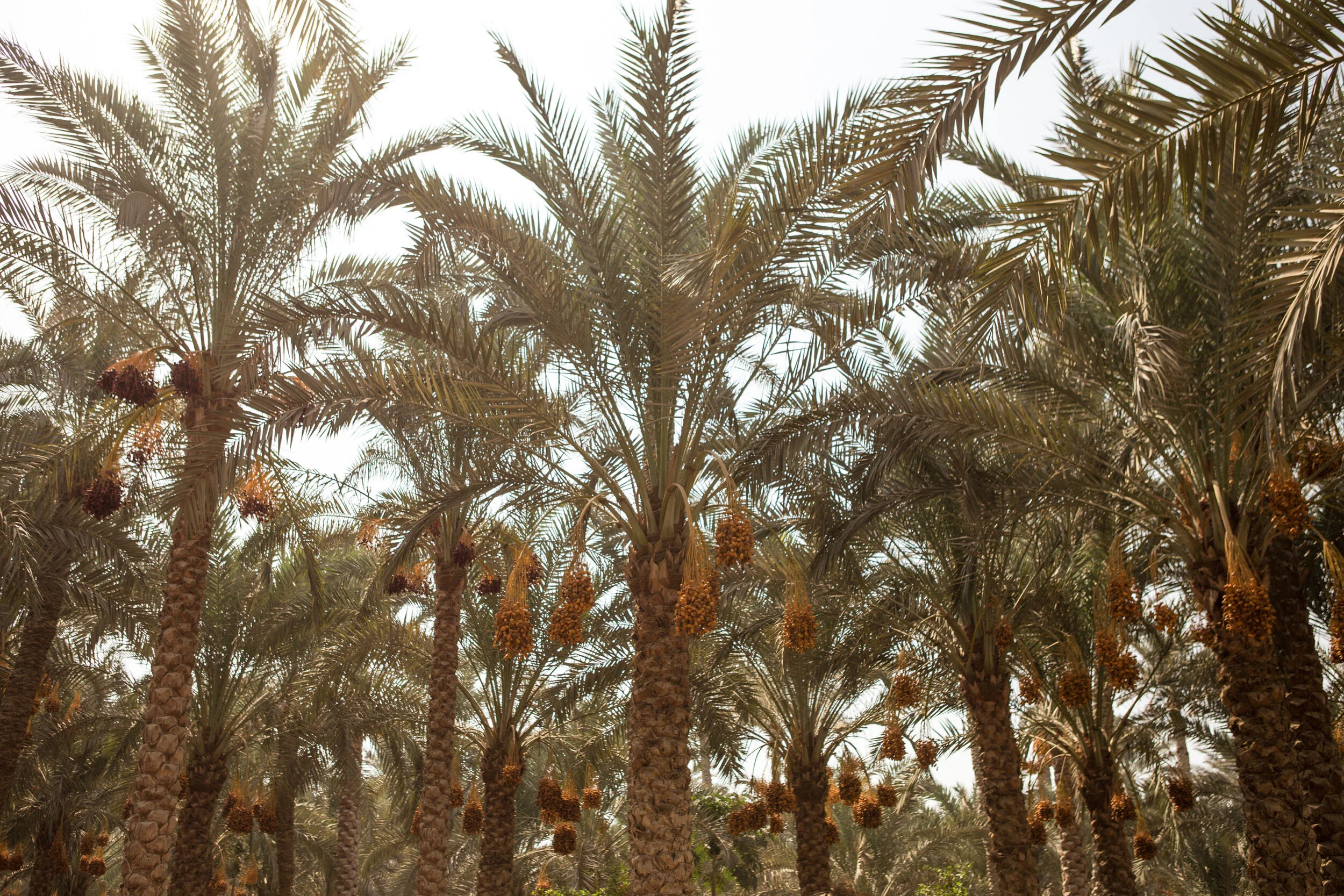
There are thousands of palm trees in Dahshour. Egypt is the largest producer of dates worldwide.
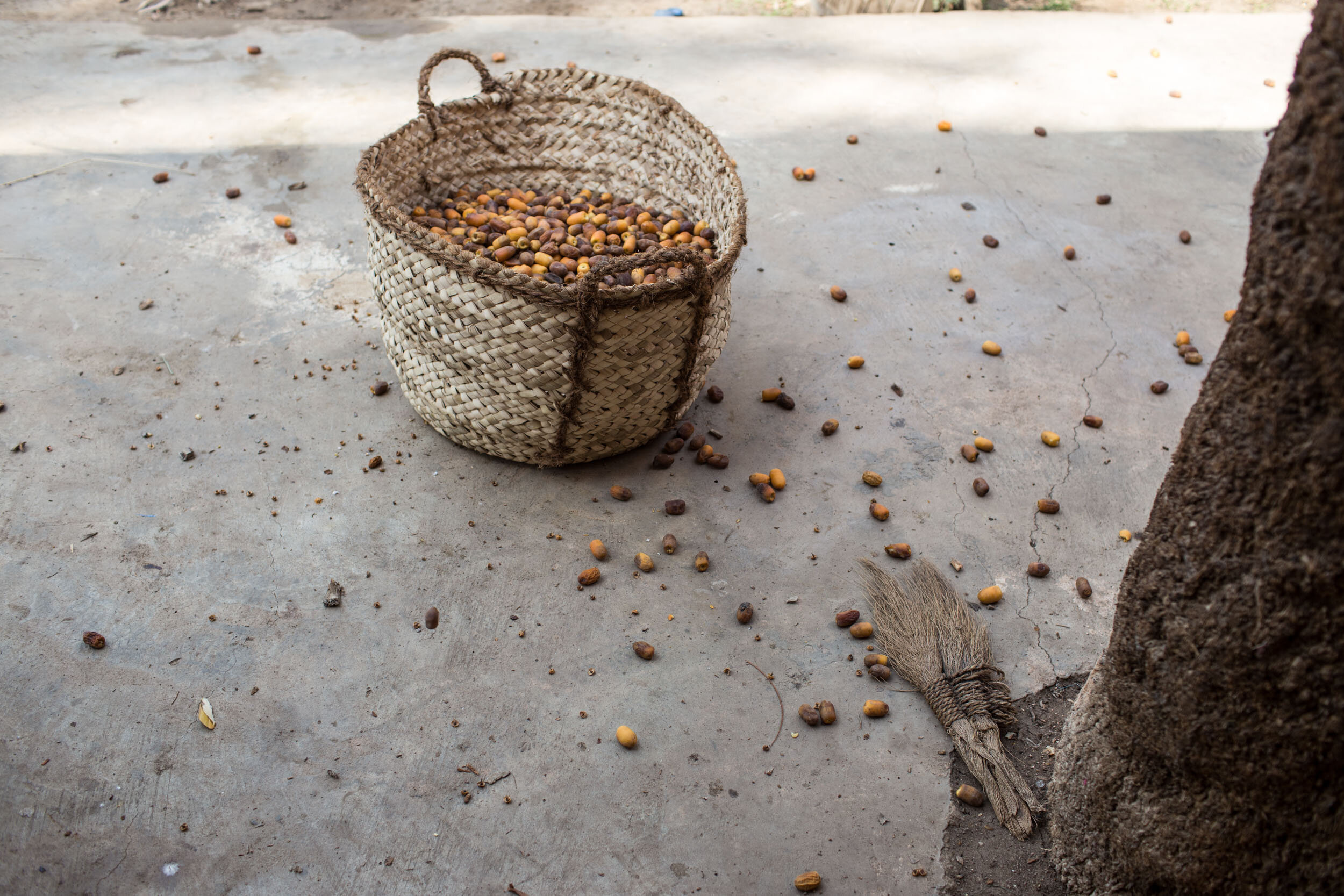
A handmade basket filled with fallen dates from the harvest used for the many stages of date harvesting. Before Ashraf climbs the tree to cut down palm fronds he shakes them allowing ripe dates to fall off the frond.
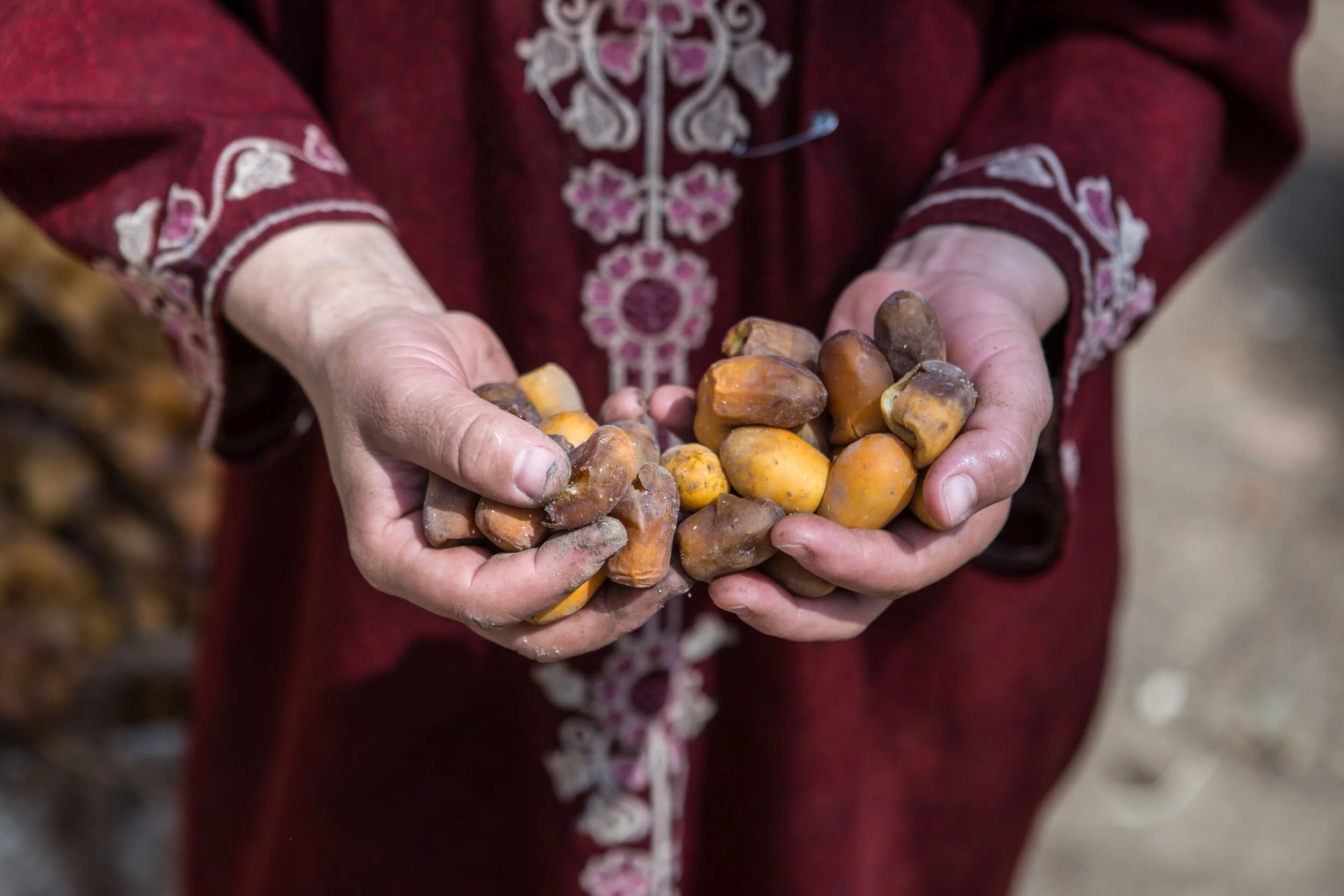
Ibtisam collects dates that have fallen to the ground and places them in a large woven basket for drying.
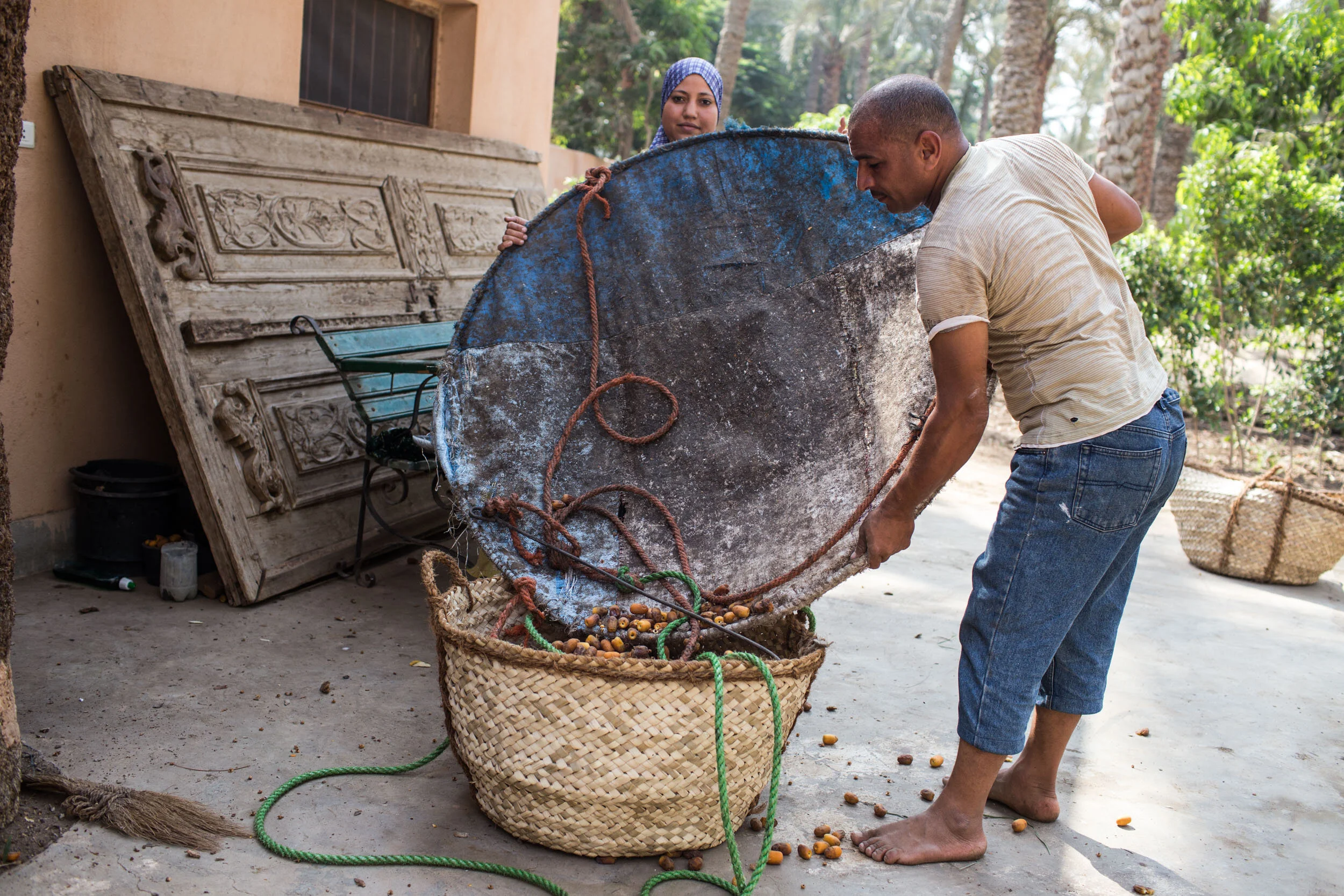
Ashraf and his wife Ibtisam empty the date catcher that Ashraf carries up the palm trees with him when he harvests.
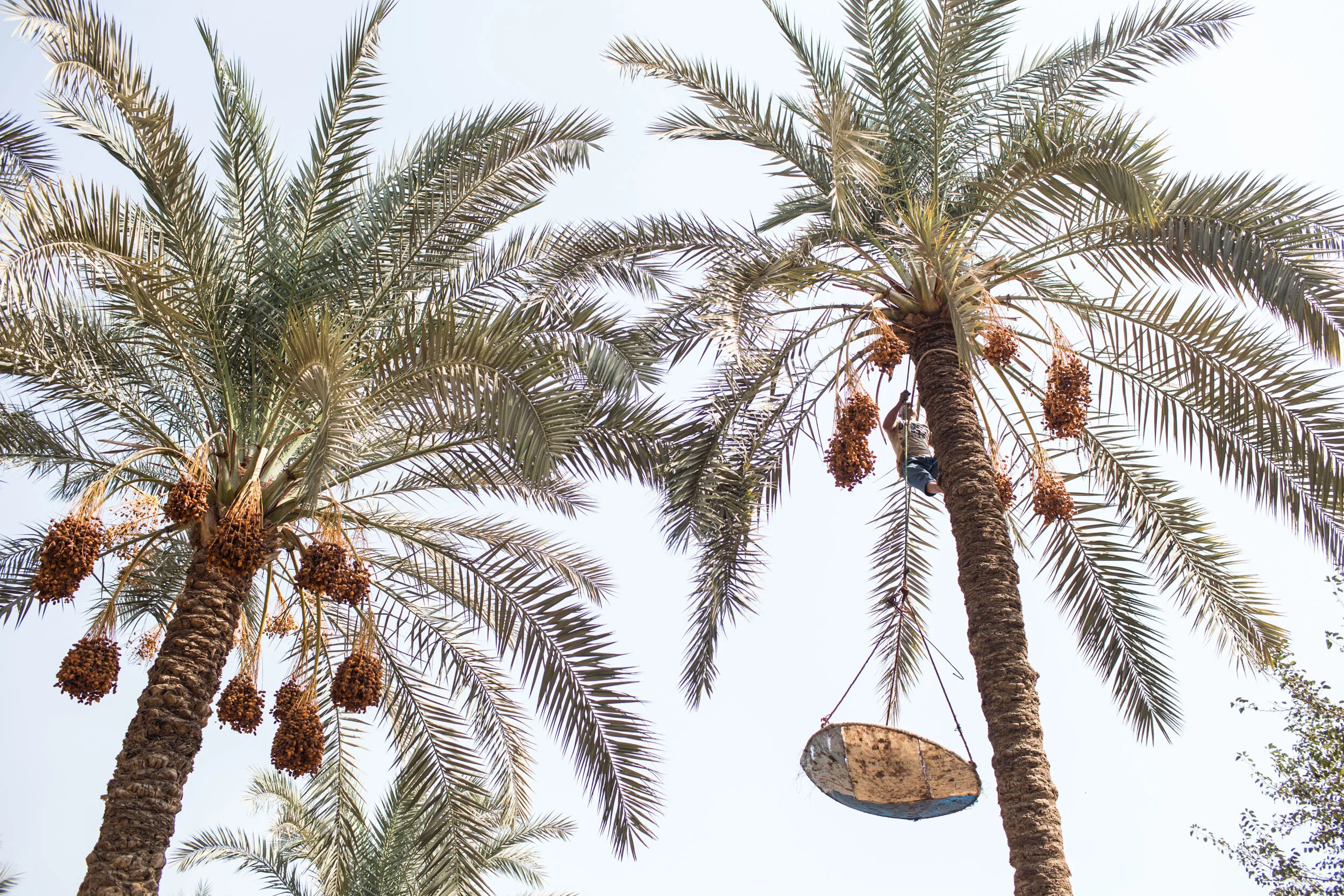
At the top of a palm tree, Ashraf shakes and cuts down palm fronds to harvest. He is not a date-palm specialist but harvests the palm trees and tends to all the farming needs on the plot of land where he and his family reside.
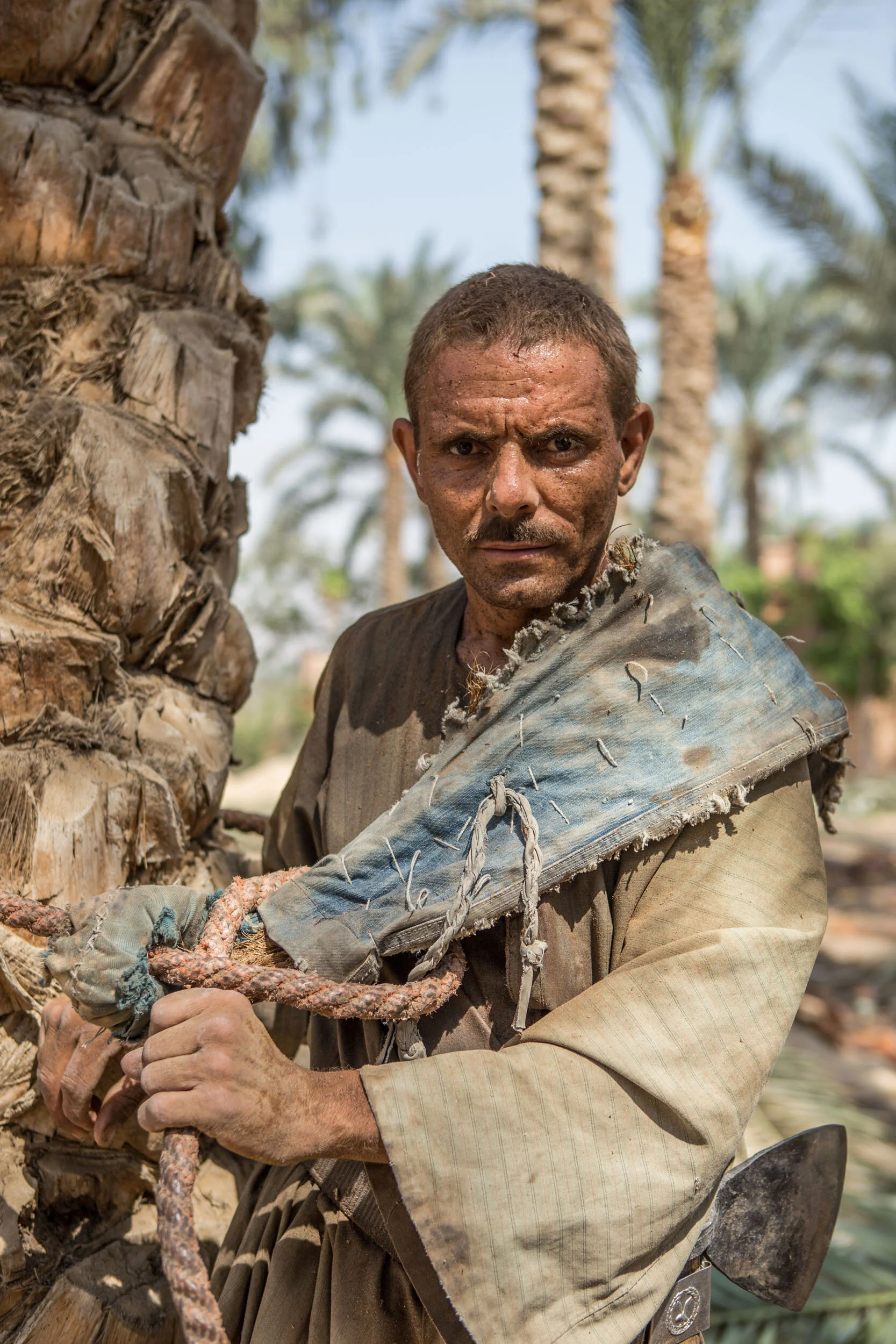
Medhat is a palm harvesting specialist who works on commission in the area to trim and harvest date palms all year round.
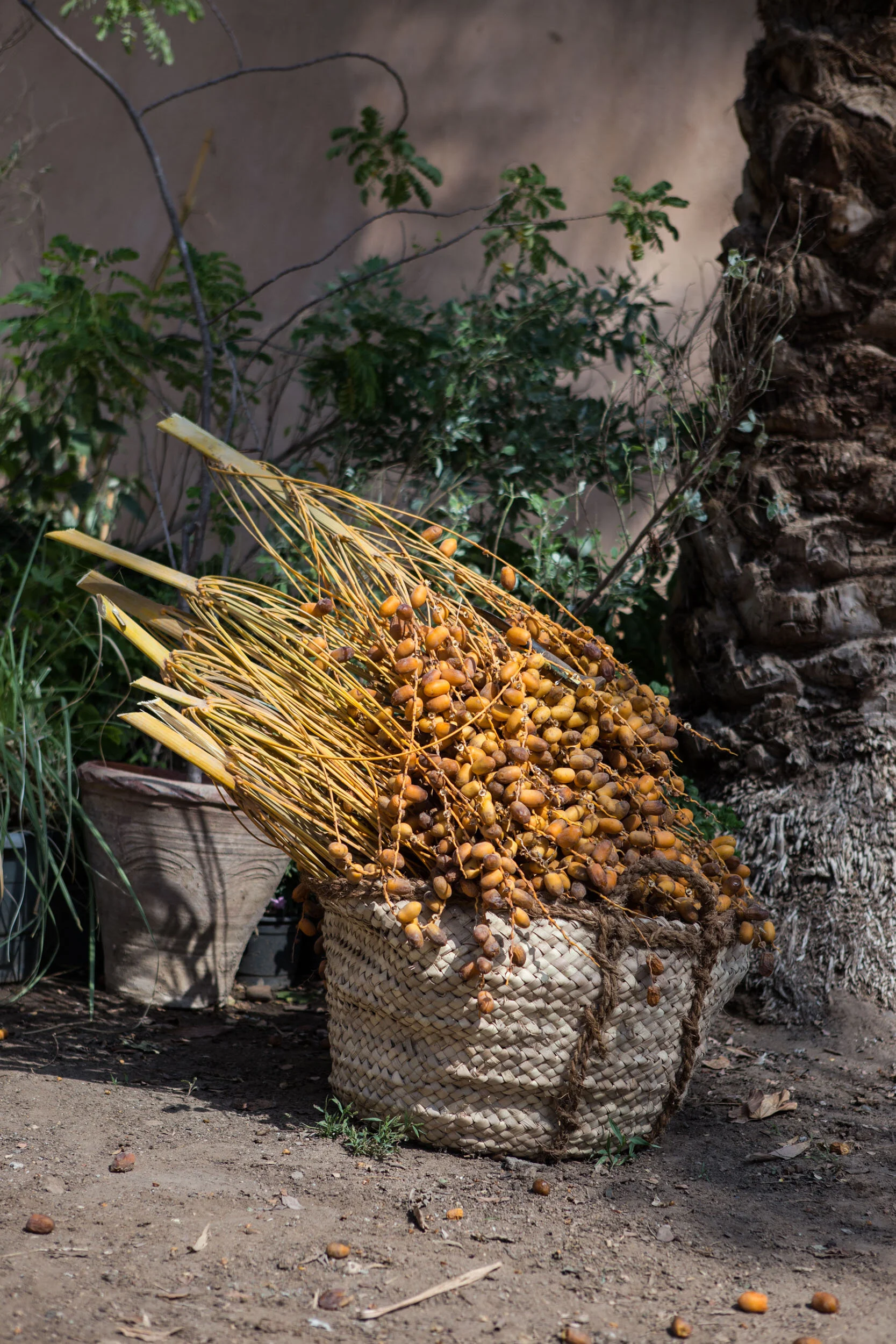
Date harvest season lasts one month, each palm tree can be harvested several times throughout the month.
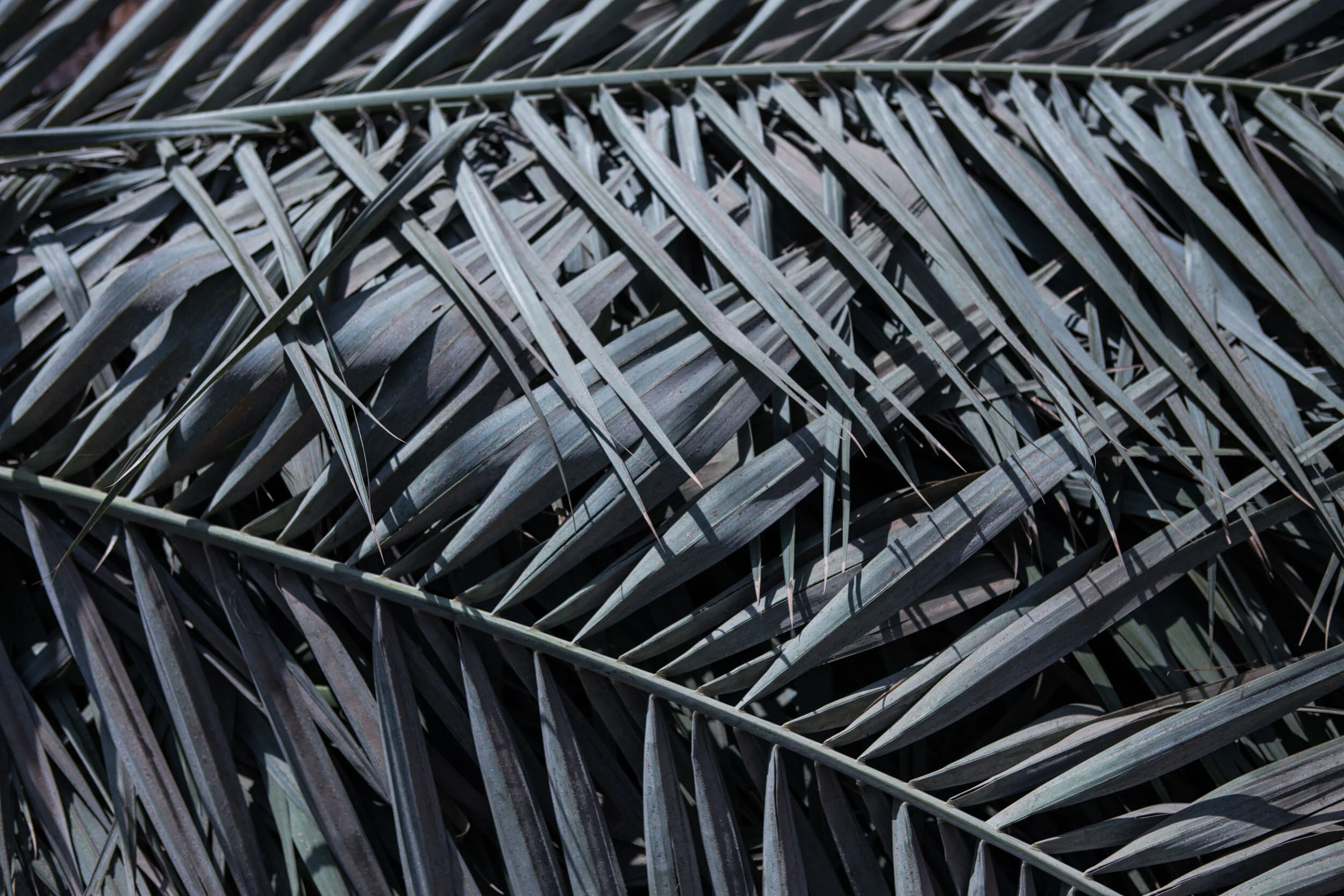
Palm tree cuttings.
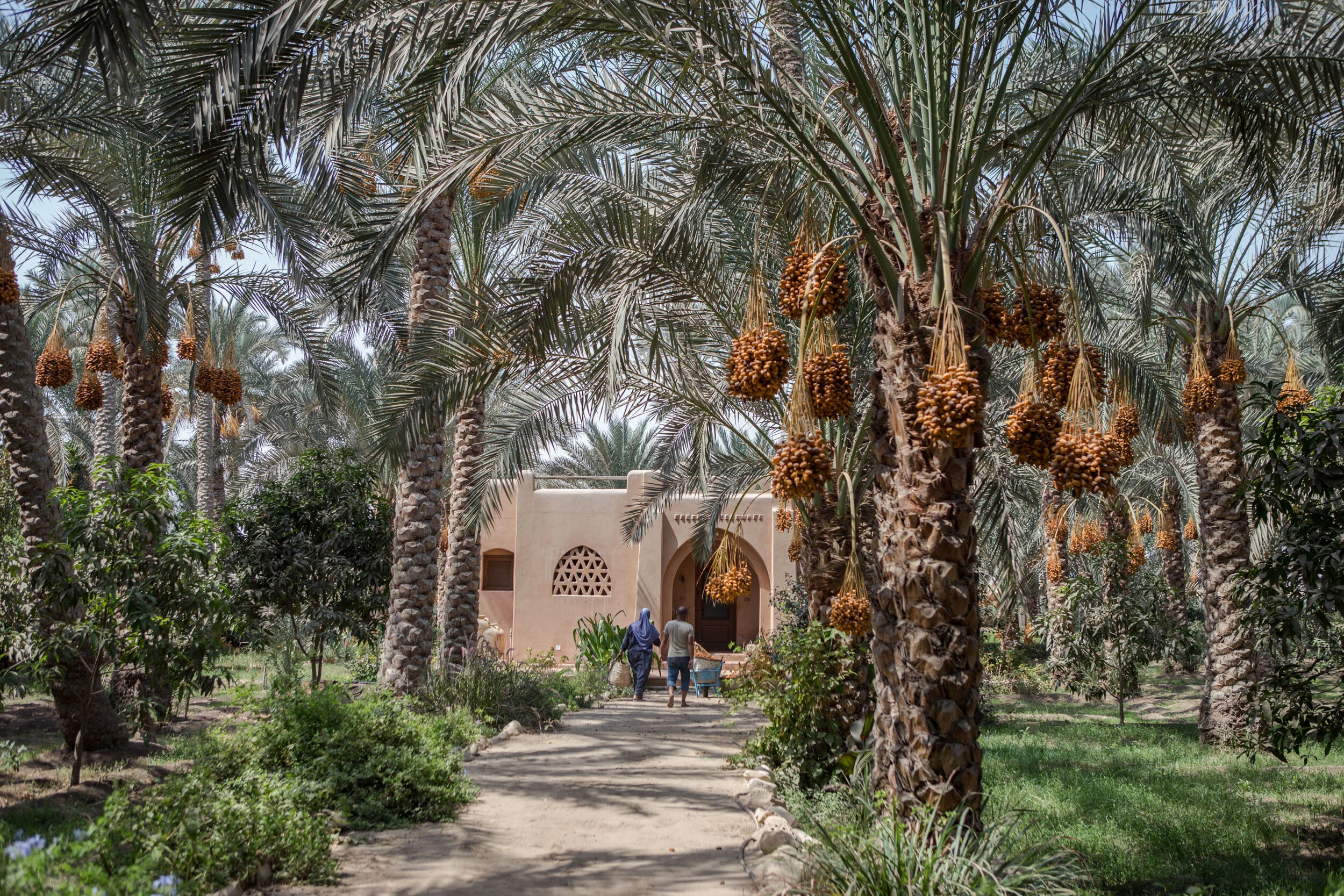
Freshly harvested dates are sun dried.
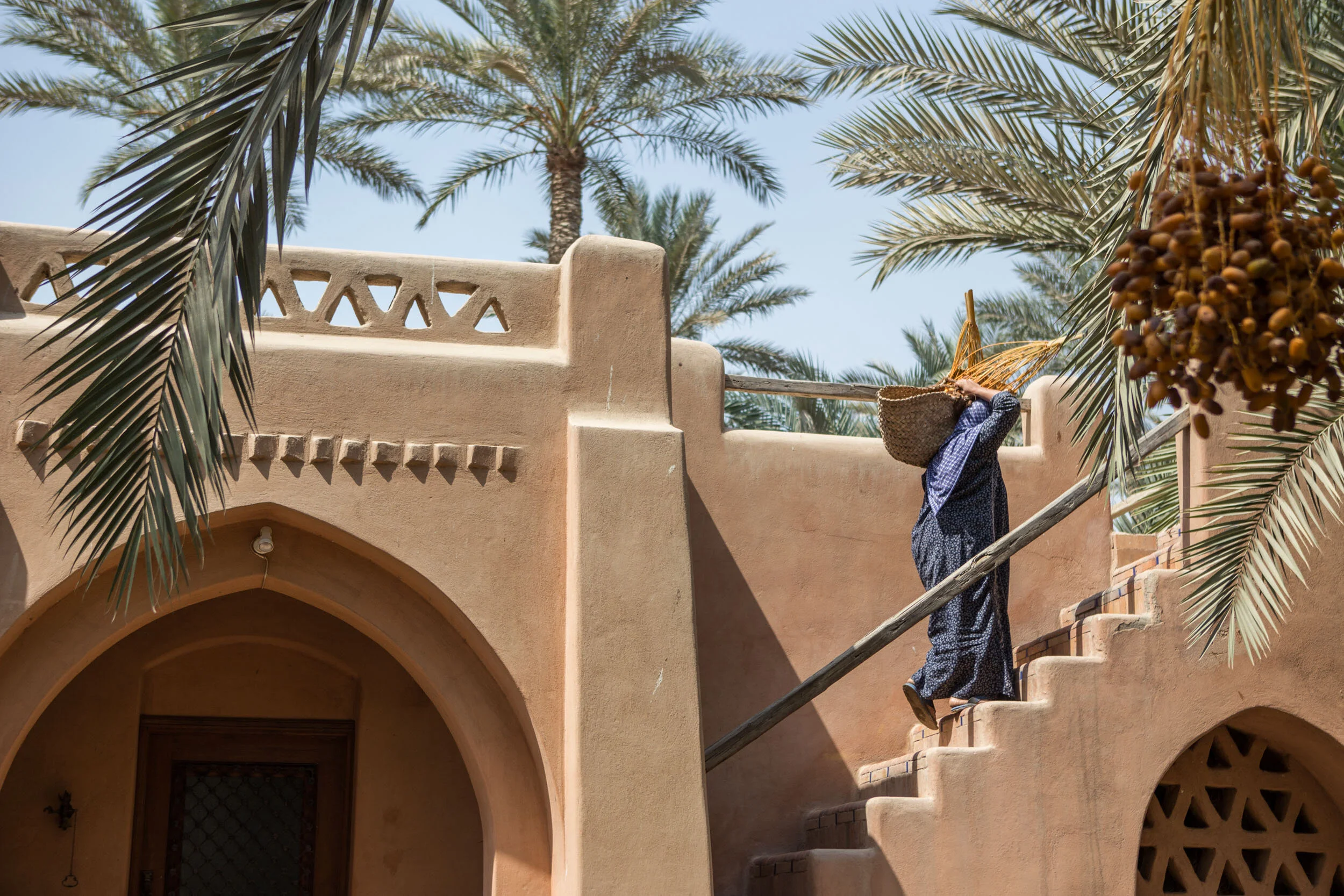
Baskets of cut palm fronds are carried to the rooftop.
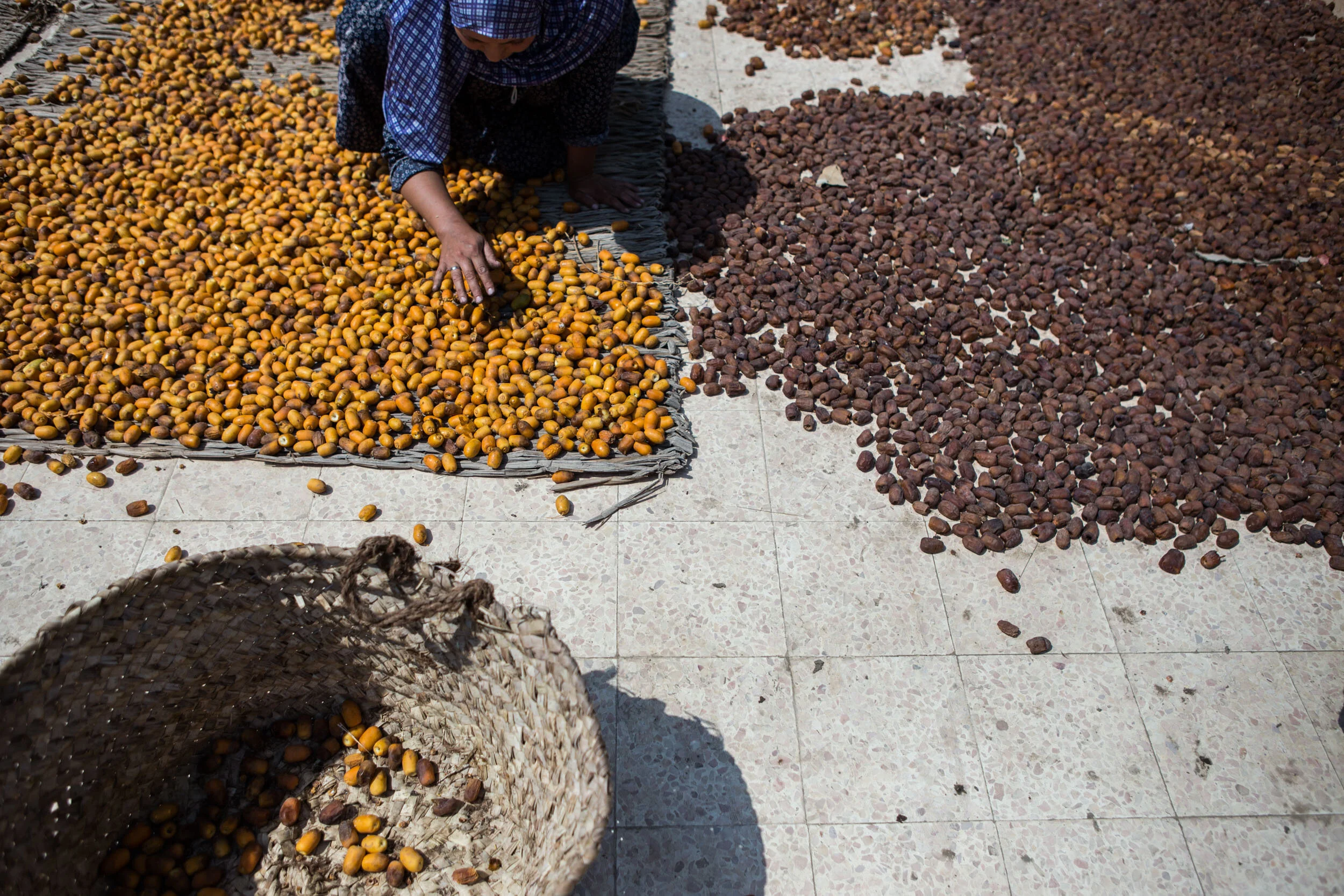
Ibtisam arranges the dates to begin sun drying. On the right are previously harvested dates that have now turned from yellow to deep brown.
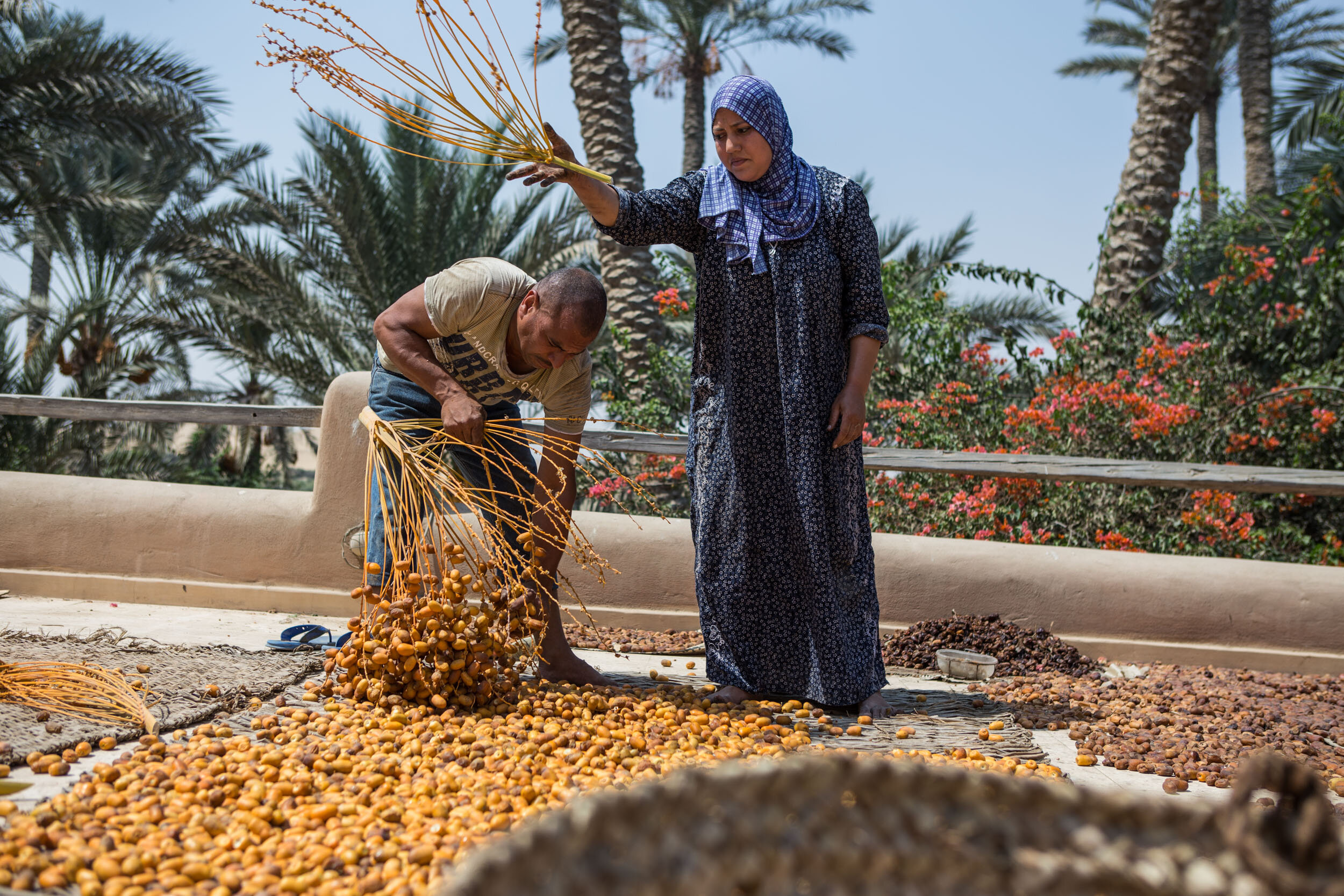
The couple remove dates from their stems, preparing them to dry. This variety of dates, the Siwi variety, is never sold fresh for consumption. It is only sun dried and made into a paste. Other date varieties have to be consumed fresh and can't be dried, they are often made into jams or sweets, their pits used for coffee.