Poppies Replacing Tourists in Sinai
As tourism slumps in politically volatile Egypt, Bedouins in South Sinai turn to opium growing as a way to make ends meet. Read more.
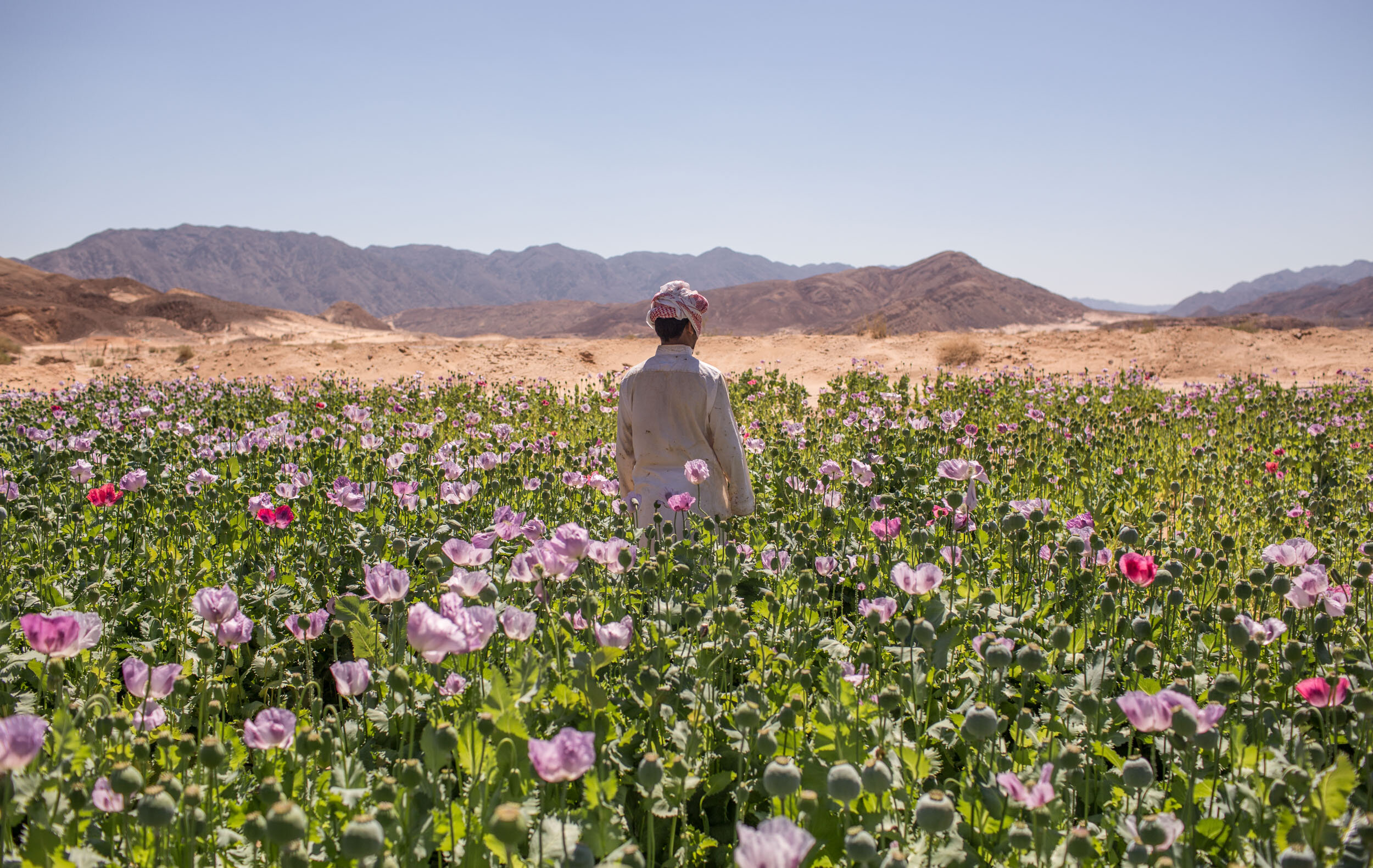
Abu Saleh standing in his opium field in South Sinai, Egypt. "Who would willingly do something like this? It is illegal, dangerous, and shameful," says Abu Saleh, a oud player and father of four turned poppy grower. "I would go back to tourism even if it meant making a tenth of what I make now from opium. But as you see, there are no tourists." As tourism slumps in politically volatile Egypt, bedouins are turning to opium growing as a way to make ends meet.
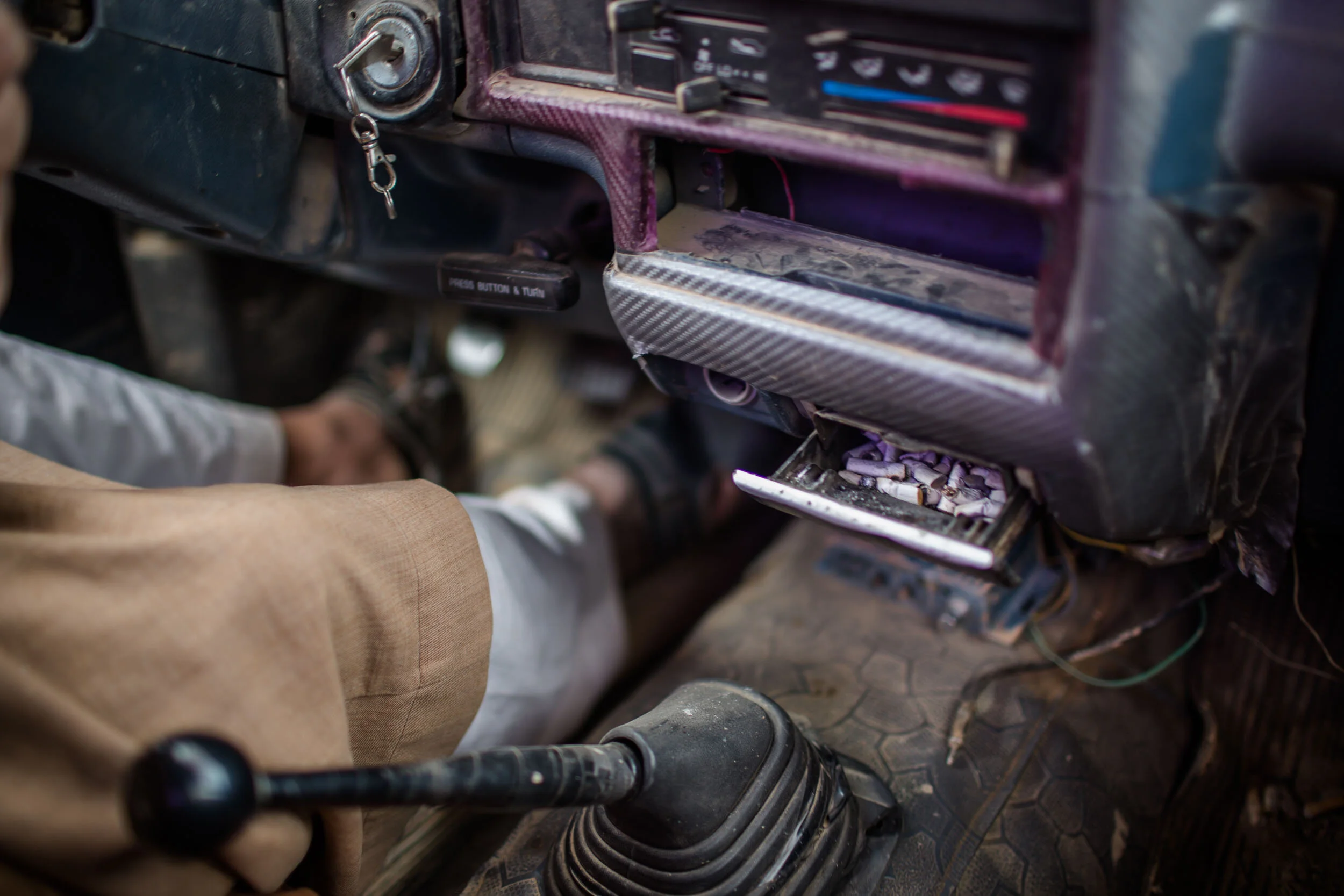
On his way to the poppy fields in South Sinai, Egypt, Abu Saleh talks about Egypt’s unrest resulting in a sharp decline in tourism forcing him to sell his camels and desert safari equipment in order to feed his family. Soon after him and his friends pooled their money together and turned to illegal opium production to support themselves long term.
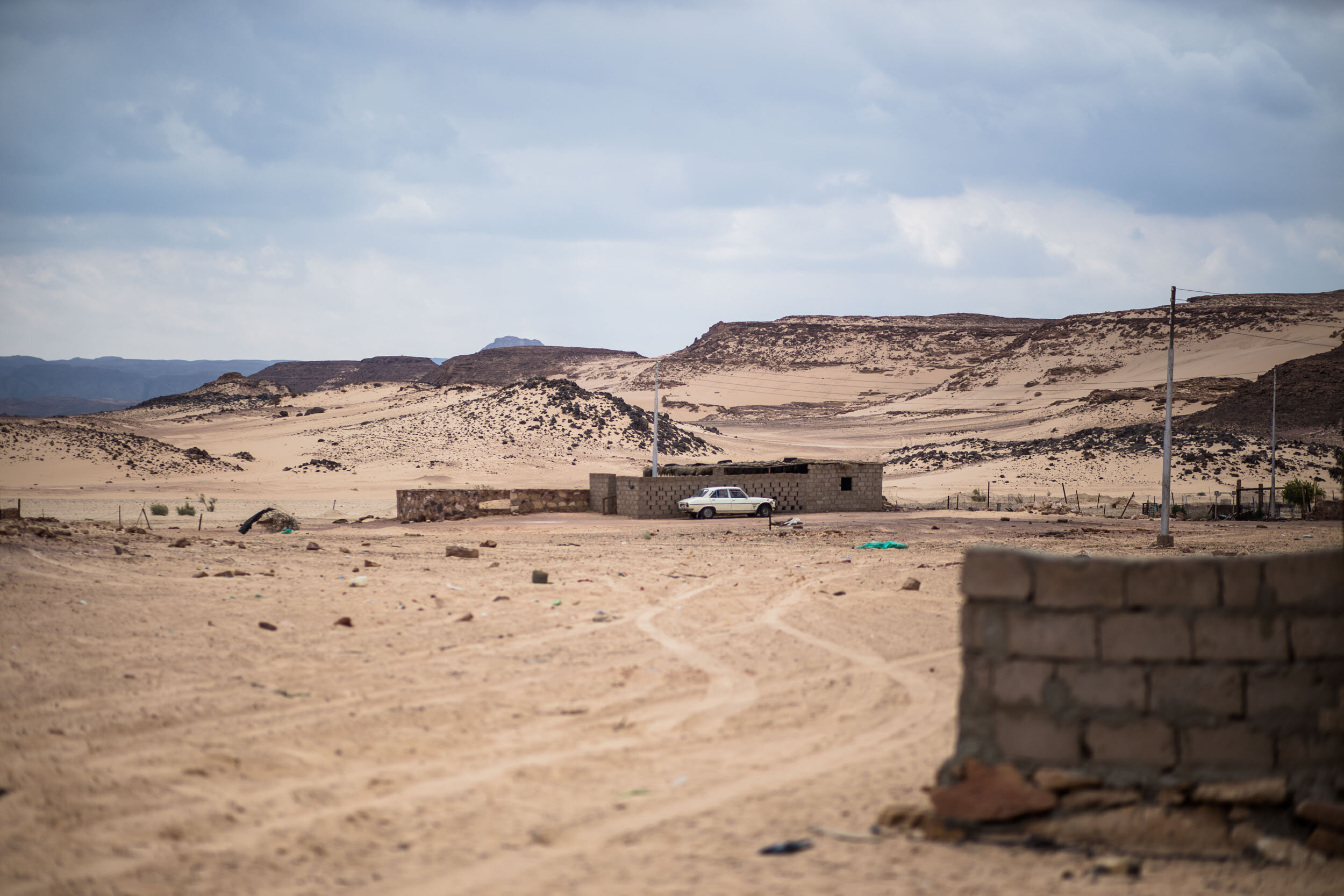
The road to Abu Saleh's field leads past vegetable patches and stops after less than a mile. From there an all-terrain vehicle ride for another mile or so leads to the poppies. Opium has been consumed in Egypt since antiquity, but the growing of poppies is a recent development.
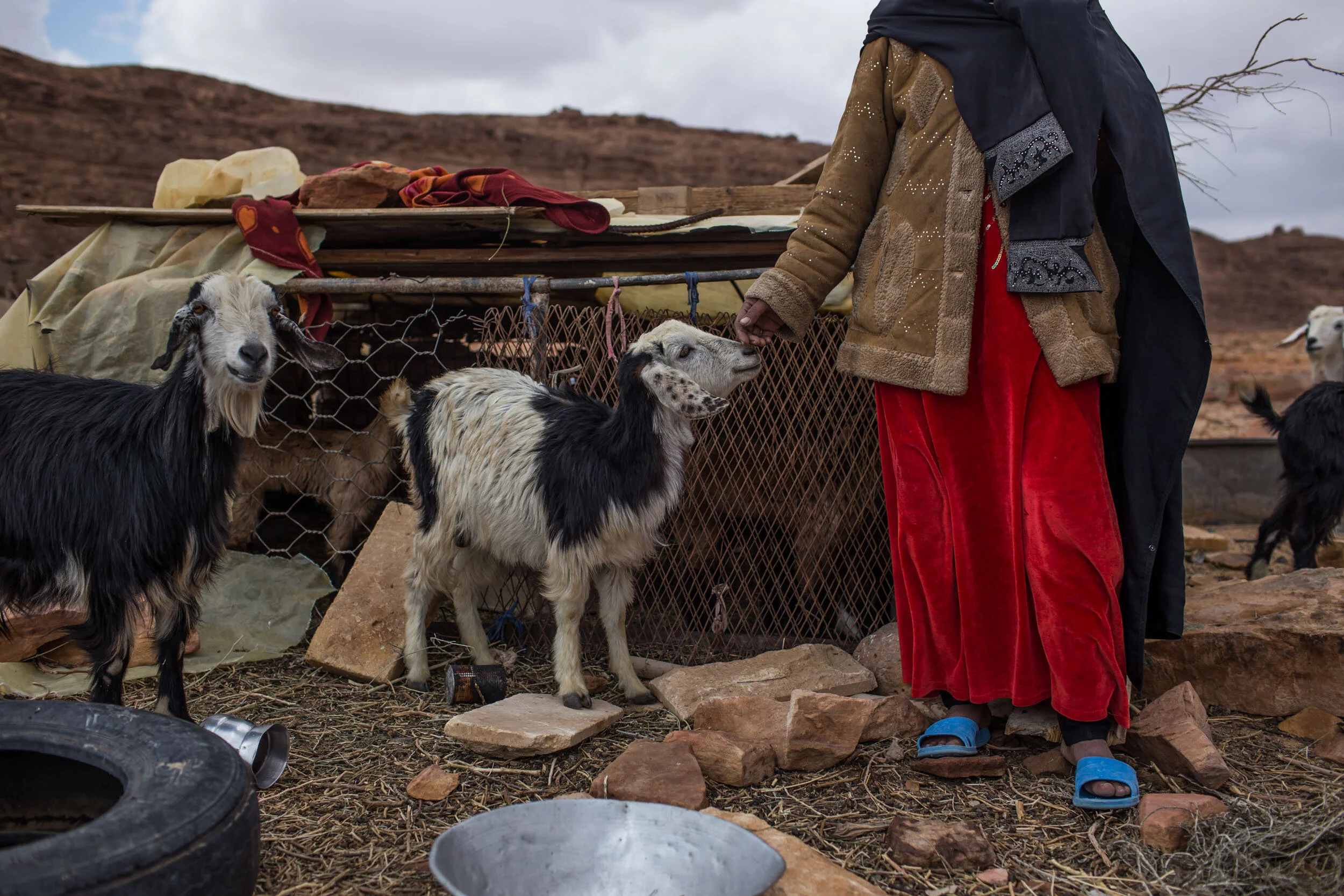
Since the decline of tourism in South Sinai, Egypt, the only source of income for most bedouin woman is tending to their livestock, selling their milk, cheese and yogurt.
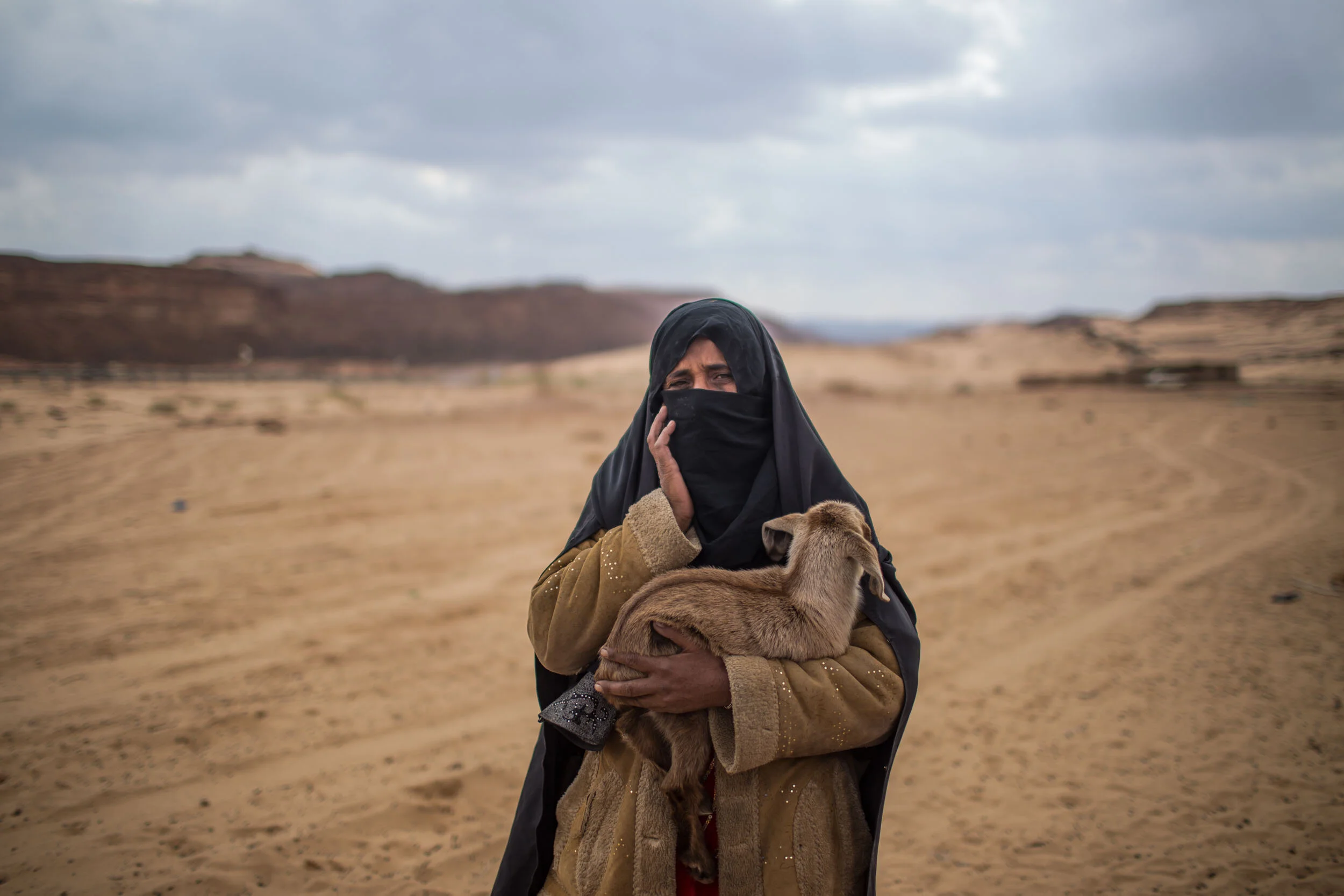
This is the wife of a bedouin poppy grower. Dozens of poppy fields are nestled into the mountains surrounding St. Catherine's Monastery, now one of the only sources of income left for bedouins.
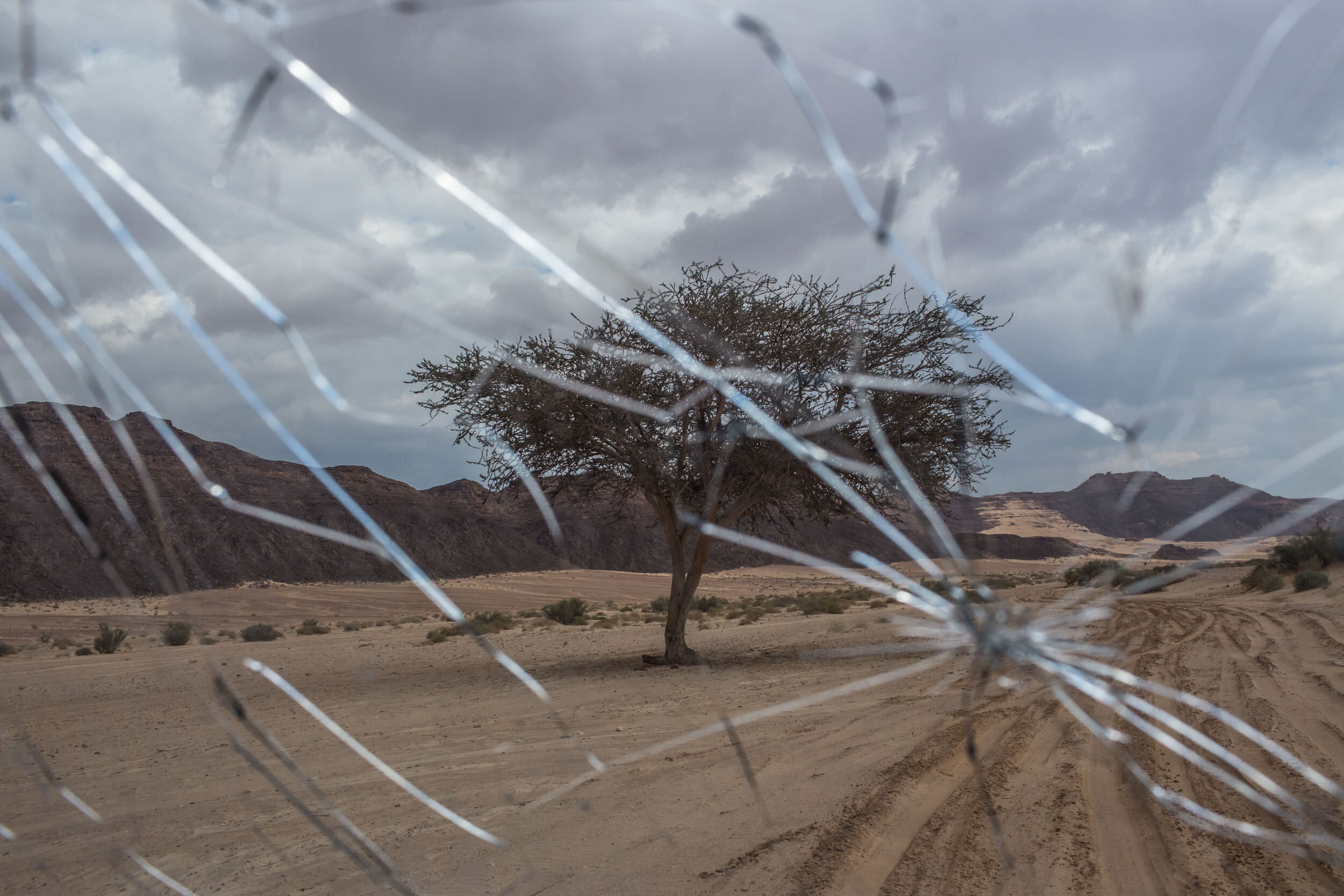
“It’s too expensive to get the windshield replaced,” Abu Saleh said “If I have any extra money I need to keep it aside for truck maintenance. I can’t risk my only mode of transportation breaking down.”
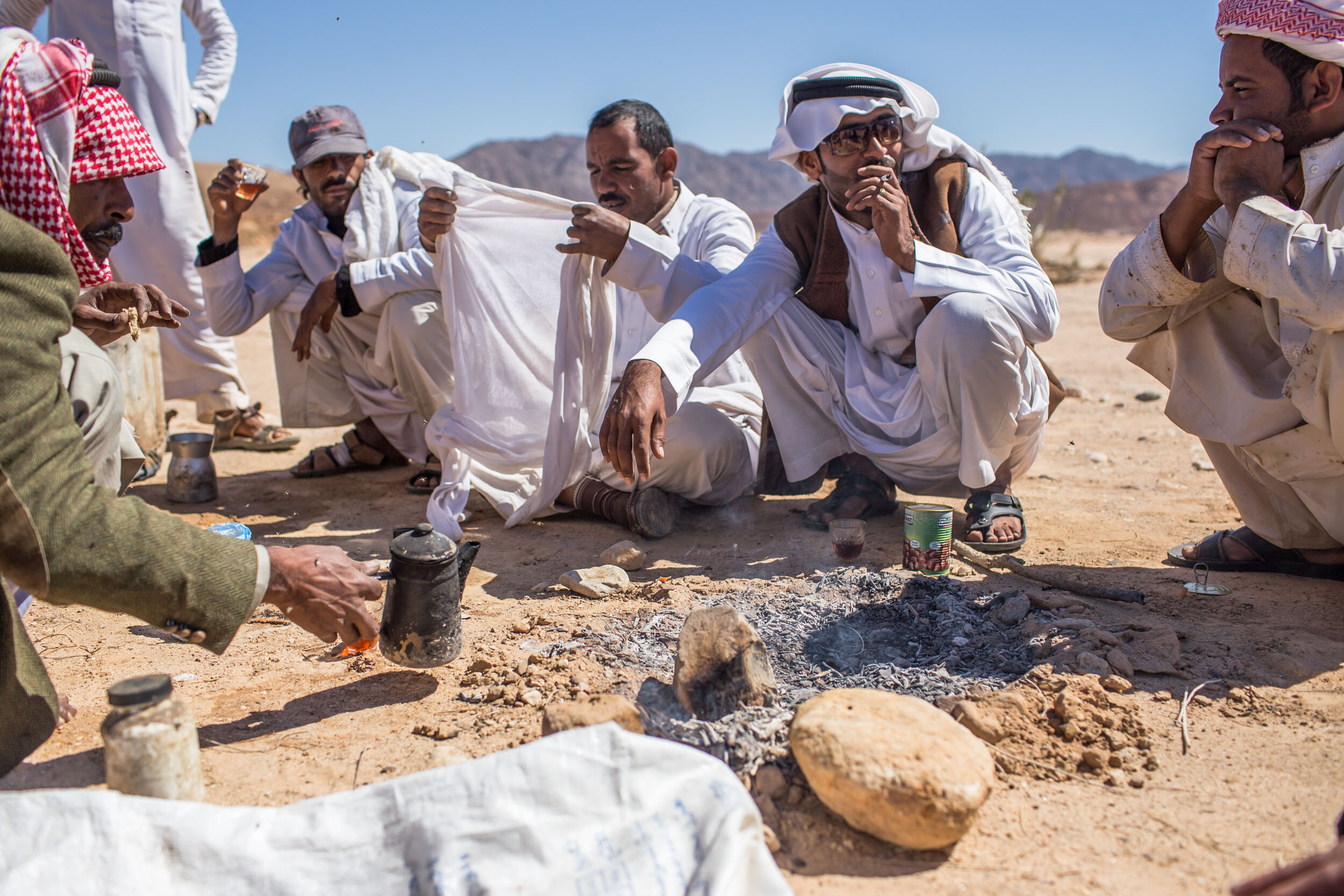
Beside a field of poppies, near Egypt’s popular Red Sea resorts, sit a motley crew of unlikely drug lords: a oud player, a resort chef and a taxi driver. They gather around a fire pit preparing tea for a mid-day break from harvesting opium.
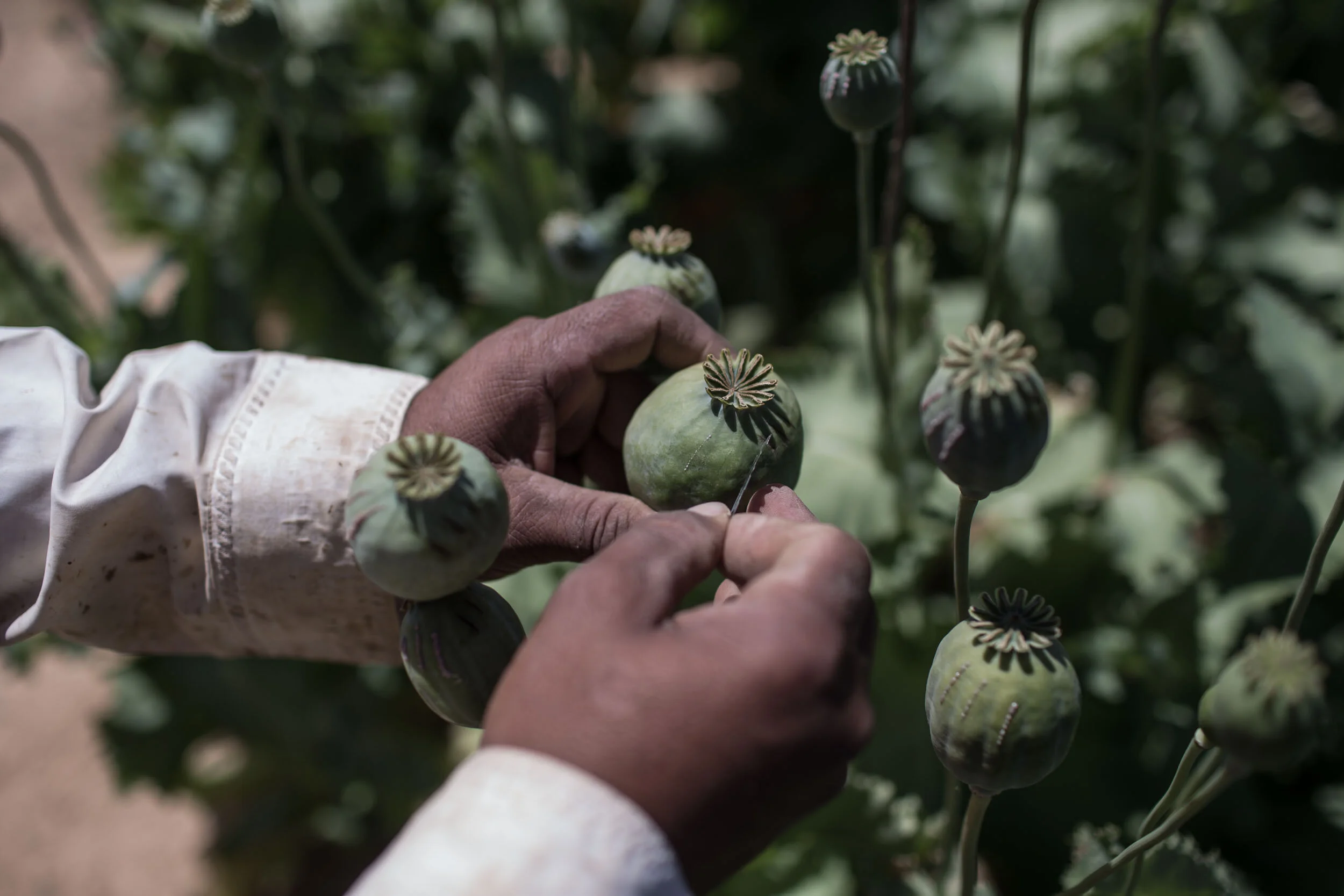
Each opium poppy pod is carefully scored with a razor blade by hand allowing the milky latex substance to ooze out and dry: raw opium, ready for sale.
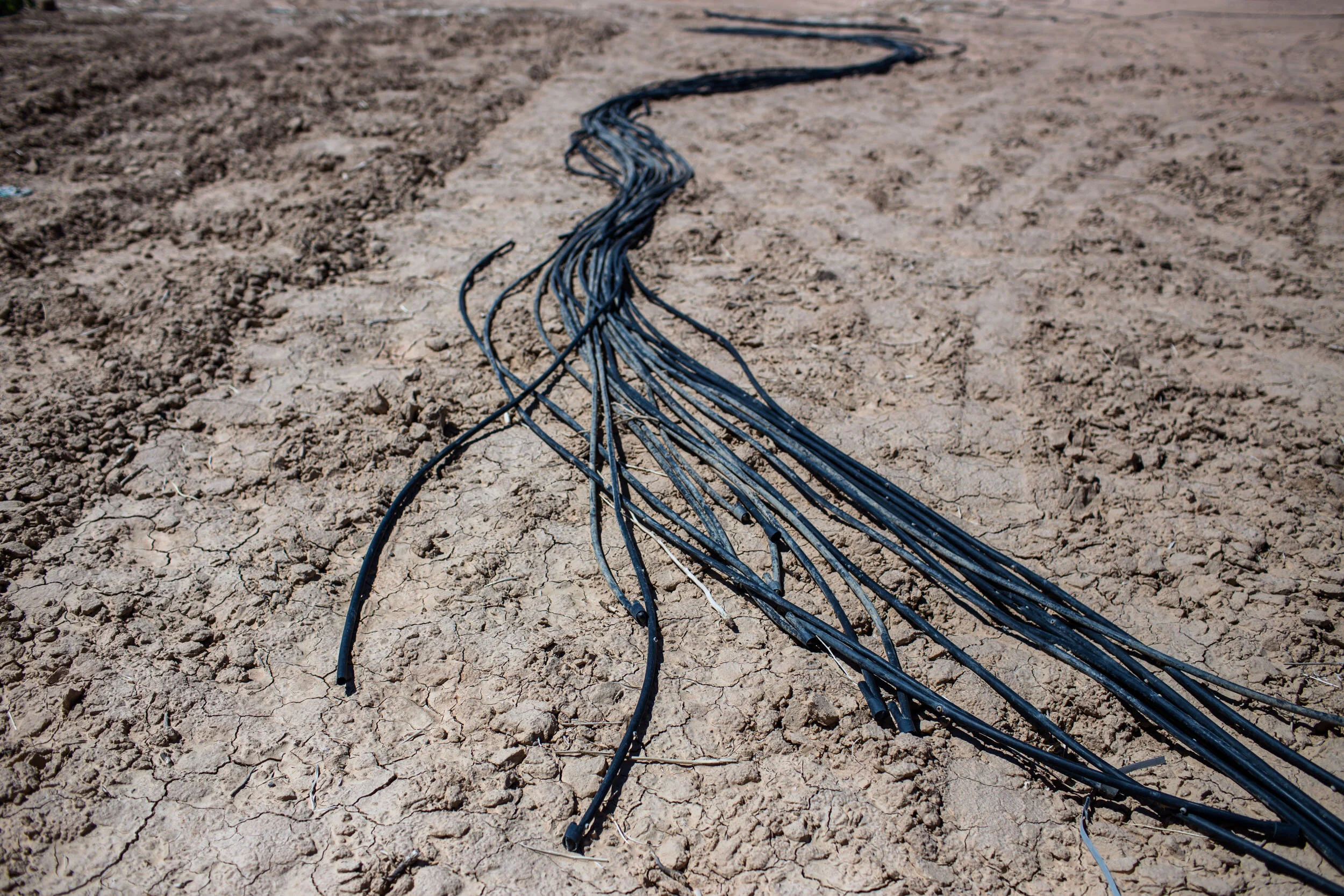
The only sound heard in the middle of the Sinai desert is the whir of generators pumping water from wells into an intricate system of irrigation pipes that feed the fields.
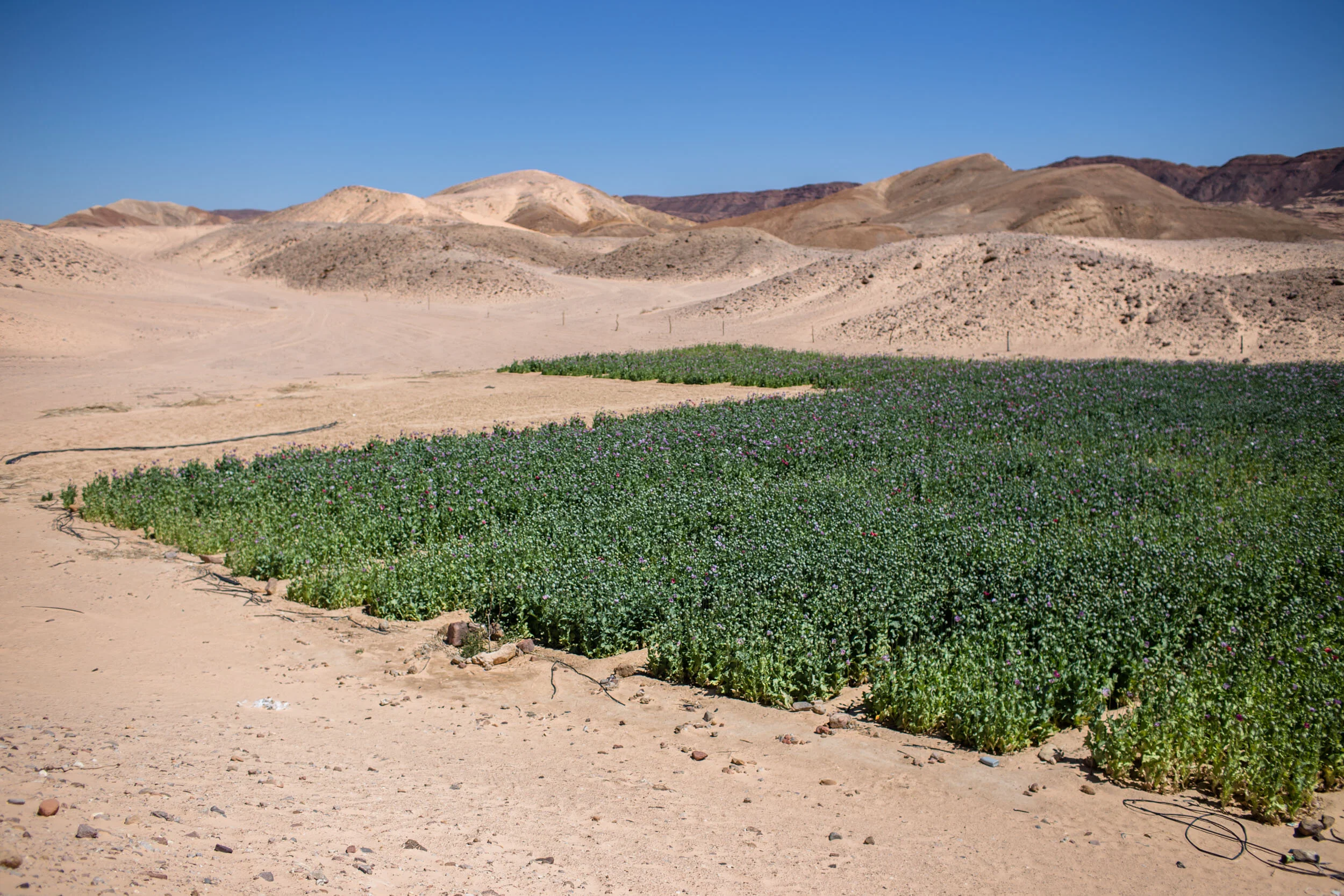
The brown terrain is punched with bright pink and purple poppy flowers laid out in lines.
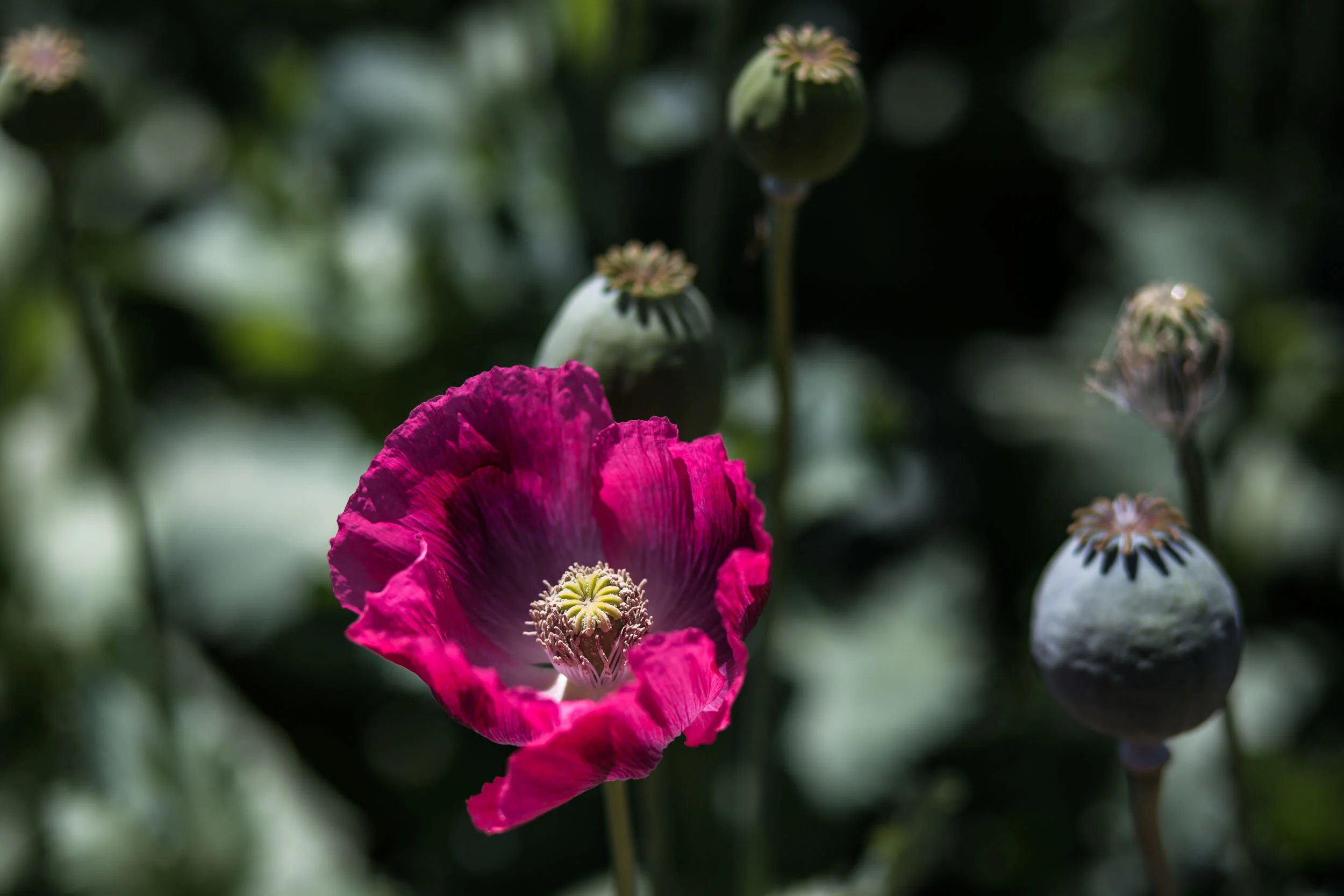
A blooming poppy in March, opium harvest time for the fields.
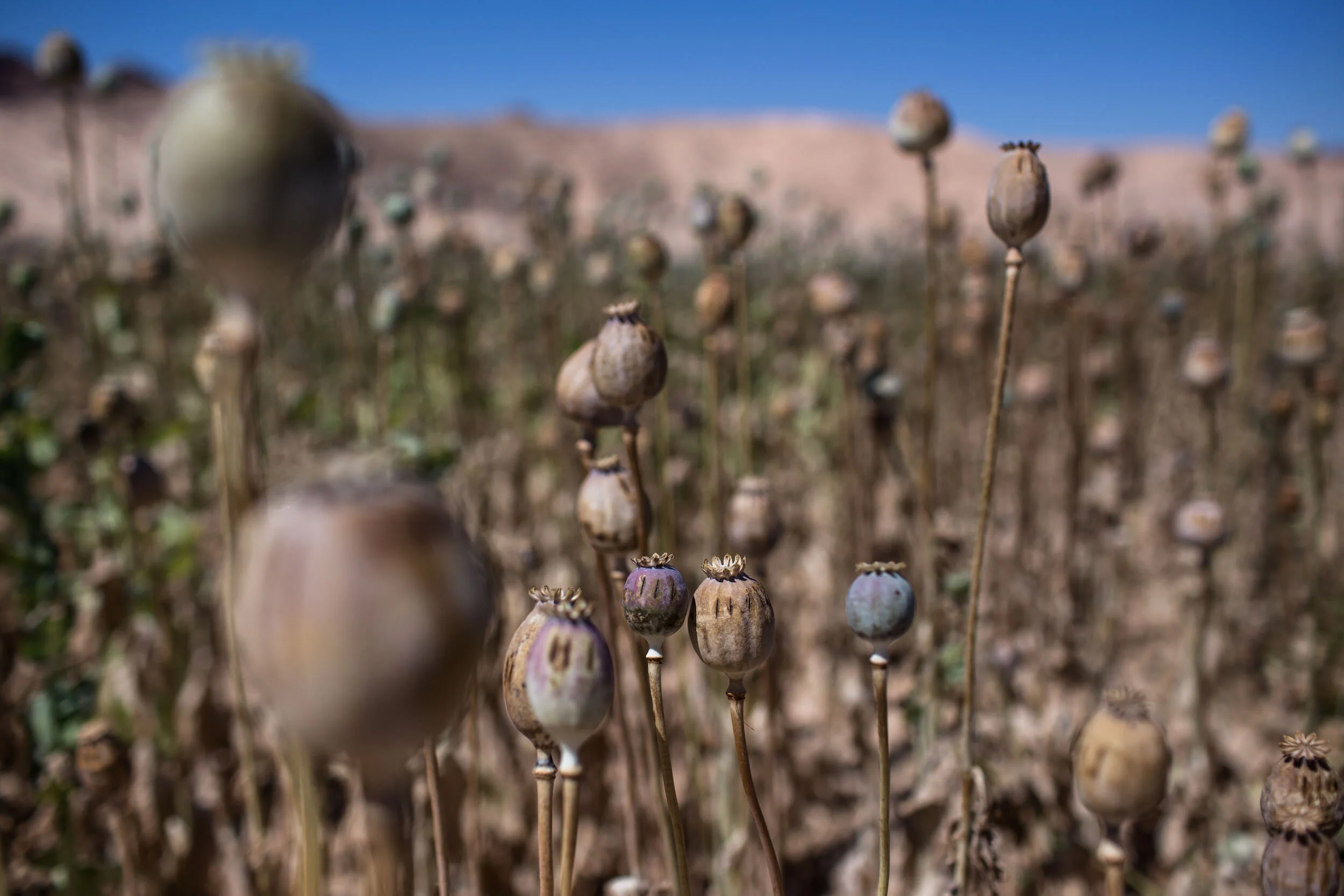
After the poppies have been scored and harvested, they dry up turning brown.
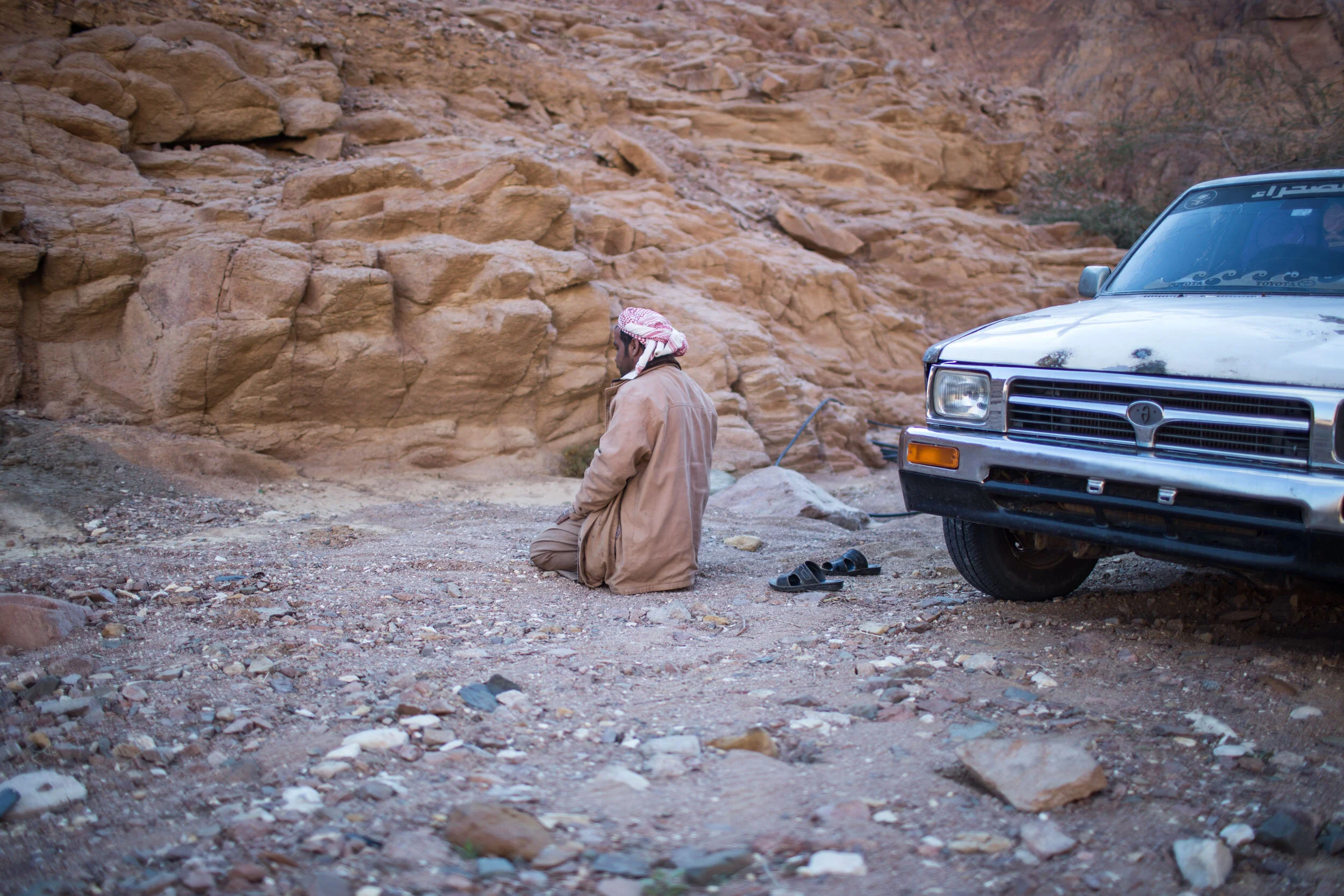
Abu Saleh prays in the desert facing Mecca. He is a religious man but doesn’t see a conflict with keeping strong faith and working in the drug trade. He says he knows it’s wrong and doesn’t condone drug usage but sees opium production as a way to support his family financially.